Male Breast Aesthetics (Gynecomastia)
- 10 Tem 2025
- 3 dakikada okunur
Up until now, we've been talking about women's breast aesthetics. Is breast aesthetics performed on men? What is gynecomastia? How is it done? We've compiled this information for you. We hope you find it helpful and wish you enjoyable reading.
What is gynecomastia? Gynecomastia refers to breast enlargement in men. In newborns, excessive estrogen secretion from the mother is transmitted to the baby through breastfeeding. Breast development is normal. Massages will help this breast tissue begin to break down. During puberty and in people over 65, breast tissue can develop due to a decrease in testosterone levels and a predominance of estrogen from the adrenal glands. If gynecomastia persists after puberty, surgical removal of the excess breast tissue can be achieved, resulting in a healthy, fit body. Before considering gynecomastia surgery, the patient should be referred to an endocrinologist to investigate the cause of the enlarged breast tissue. Treatment should begin after determining the cause of the enlarged breast tissue. If breast tissue growth is due to decreased levels of the male hormone testosterone, hormone therapy can help restore the hormone to its normal levels. It's also possible that the breast tissue disappears on its own after treatment. However, if there is still breast tissue remaining despite treatment, then surgical intervention can be considered.
Types of Gynecomastia: There are many classifications for gynecomastia. Fluoride: Dense breast tissue. Intermediate Form: A mixture of fat and breast tissue under the breast. Fibrous: A hard mass that has been present under the breast for more than a year.
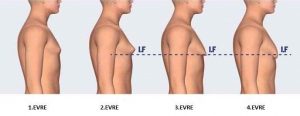
As you can see in the image above, the stages of gynecomastia are presented. Stage 1: Mild breast tissue enlargement Stage 2: Moderate breast tissue enlargement Stage 3: Moderate breast tissue enlargement and excess skin Stage 4: Severe breast tissue enlargement and sagging excess skin The decision-making process for gynecomastia surgery is based on the size and stage of the gynecomastia, rather than the tissue type under the breast.
How is Gynecomastia Surgery Performed? The type of breast tissue determines the type of intervention performed in gynecomastia surgery. Gynecomastia surgeries are performed using closed, endoscopic, and open methods. In closed surgery, no incisions are made in the tissue. The endoscopic method can also be called semi-closed. The open method, however, involves an incision in the tissue. Closed Method: Liposuction is used for breast deformities that are compatible with Stage 1 and Stage 2. Because there is no sagging skin, no intervention is required. It offers the significant advantage of eliminating incisions and scars. The closed method is the most commonly used and preferred method in gynecomastia surgery. However, it is inadequate for breast deformities in Stages 3 and 4. Other techniques are preferred for these stages. Endoscopic Method: This method is suitable for gynecomastia deformities that do not have severe skin sagging. Excess fat is removed with a laser or Vaser liposuction device. The goal is to achieve skin tightening endoscopically using laser and vaser devices. If there is severe skin sagging, this method may be inadequate. Open Surgery: For the most advanced cases of gynecomastia, an open technique is essential. Stage 4 breast deformities require an open procedure. In this procedure, a crescent incision is made in the light brown area around the nipple, removing the fibrous tissue inside. The sagging skin is then tightened with stitches. If the crescent incision is insufficient, an inverted T technique can also be used for breast reduction.
Gynecomastia Recovery Process: Gynecomastia surgery takes approximately 45 minutes to 1 hour, depending on the procedure used. When performed under general anesthesia, a one-night hospital stay is recommended. Local anesthesia is also recommended, depending on the technique used. There is no overnight stay after local anesthesia. A corset is worn during the surgery, and a follow-up appointment is scheduled for one week. After one week of quality rest, patients can resume their social and professional activities.


Yorumlar